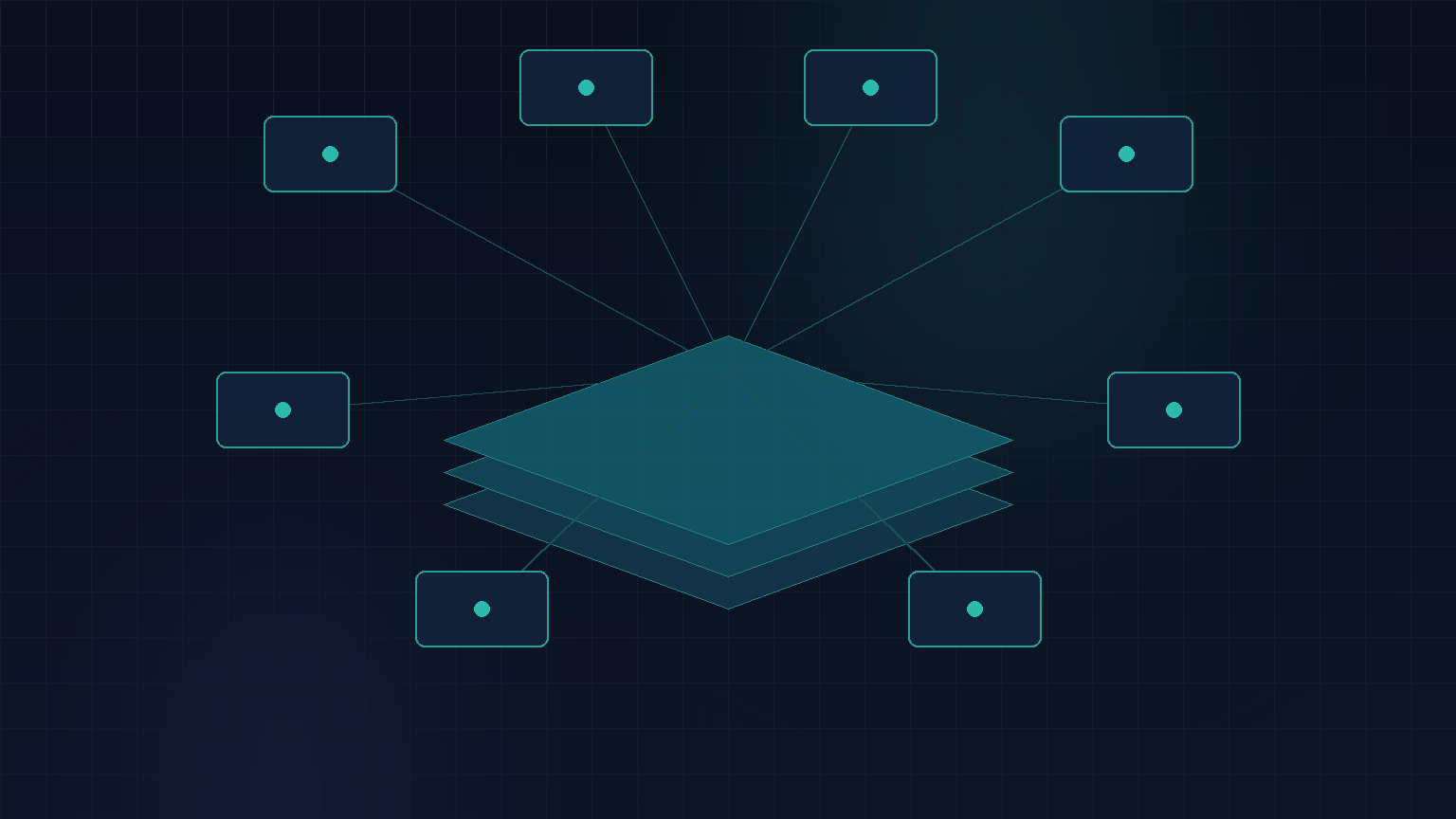
SaaS development Singapore buyers are usually not asking for “an app.” They need a subscription product that many customers share safely: multi-tenant architecture, tenant isolation, sign-up and onboarding, subscription billing in SGD with GST handled correctly, admin consoles, and the security evidence Singapore enterprise customers ask for before they sign. WC1 Entre Ventures designs and builds B2B SaaS products for Singapore founders, product companies, and corporate venture teams, from the first tenant to the first enterprise procurement review.
SaaS development Singapore: who it’s for
This page is for founders, CTOs, heads of product, and corporate innovation leads in Singapore who are building software they will sell on subscription to other businesses. Typical situations: a validated service business turning its internal tool into a product; a funded startup that needs a SaaS development company Singapore teams can hold accountable for architecture, not only feature tickets; or an established operator spinning out a vertical platform for its industry.
You are a fit if your roadmap includes many customers on one codebase, per-tenant configuration, self-serve or sales-led onboarding, and enterprise buyers who send security questionnaires. You are not a fit for this page if the software is for your own operations only. That is a bespoke internal build, covered on custom software development Singapore. If you are still shortlisting partners and comparing engagement shapes, start with software development company Singapore. Parent pillar: Custom Software.
What we deliver
We deliver operable B2B SaaS product development Singapore capabilities that hold up when the tenant count grows and the buyers get bigger:
- Multi-tenant architecture: a tenancy model (shared schema, schema-per-tenant, or isolated stacks for regulated tenants) chosen for your customer mix, with tenant context enforced in every query and job
- Identity and access: customer SSO (SAML/OIDC), role-based access per tenant, invitation flows, and audit trails customers can export
- Subscription billing and metering: plans, seats or usage metering, trials, proration, invoices, and GST treatment designed with your finance owner
- Onboarding and admin: tenant provisioning, configuration screens, data import, and an internal operations console so support does not need database access
- Integrations and APIs: versioned public APIs, webhooks with retries, and connectors your customers expect, documented for their developers
- Release discipline: CI/CD, feature flags per tenant, staged rollouts, and rollback so one release cannot break every customer at once
- Enterprise readiness: security questionnaire answers backed by artefacts, data-flow diagrams, subprocessor lists, backup and recovery tests, and exit/export paths
SaaS readiness gates before your first Singapore enterprise customer
Use this matrix to check whether a multi-tenant SaaS Singapore product is ready for procurement. Each row is a gate we build into scope and acceptance, so the evidence exists before a buyer asks for it.
| Gate | What Singapore enterprise buyers typically ask | Artefact you should be able to hand over |
|---|---|---|
| Tenant isolation | Can another customer ever see our data? | Tenancy design note, automated cross-tenant access tests, and results from the last release |
| Personal data handling | What personal data do you process for us, where, and for how long? | Data inventory per feature, retention settings per tenant, deletion and export procedure |
| Breach readiness | How fast will you tell us if something goes wrong? | Incident runbook with a named owner, and a customer notification path that supports their PDPA obligations |
| Access control | Who on your side can reach production, and how is that logged? | Privileged-access list, MFA enforcement, and an access log sample |
| Resilience | What happens if the platform or a region fails? | Backup schedule, last restore test record, recovery objectives agreed with you |
| Change control | Will a release break our integration? | Release notes, API versioning policy, deprecation windows, and feature-flag rollout plan |
| Third parties | Which subprocessors touch our data? | Subprocessor register and data-flow diagram kept current per release |
| Exit | Can we leave with our data? | Documented export format, tested export job, and deletion confirmation step |
Engagement model
SaaS products change after launch, so we price and staff for that. A common path:
- Product and architecture discovery: target customers, pricing model, tenancy model, integrations, and the minimum enterprise-readiness bar for your first deals
- Foundation build: tenancy, identity, billing skeleton, CI/CD, and observability before feature volume, so they do not become a rewrite later
- Feature delivery in releases: vertical slices shipped to real environments behind flags, with demos you can show prospects
- Enterprise readiness sprint: questionnaire evidence, recovery test, data-flow diagrams, and export paths, timed before your first large procurement
- Run and scale: a capacity-based team beside your own engineers, or a handover with runbooks and knowledge transfer
Commercial terms follow scope clarity: fixed price for a well-bounded discovery or foundation slice; time-and-materials or a dedicated capacity model once the roadmap is driven by customer feedback. We quote in SGD after discovery rather than publishing generic rate cards. For budgeting logic, read our Singapore custom software cost guide in SGD and fixed price vs time and materials in Singapore. If you are still deciding whether to build at all, start with when custom software beats SaaS.
Our process
1. Decide the tenancy and pricing model together
Seat pricing, usage pricing, and per-tenant isolation requirements all change the data model. We settle them in discovery so billing and architecture do not fight each other later.
2. Build the foundation before feature volume
Tenant context, identity, audit logs, and deployment pipelines come first. Cross-tenant access tests run in CI from the first sprint, not at the end.
3. Ship releases customers can trust
Feature flags per tenant, staged rollouts, versioned APIs, and rollback plans let you move quickly without breaking every customer at once. Infrastructure and pipelines sit with our DevOps Singapore practice when you need them.
4. Produce enterprise evidence as a by-product
Security questionnaire answers should point to artefacts that already exist: test results, access logs, restore records, and subprocessor lists. Application-layer testing can be added through application and API security.
5. Operate, measure, and hand over cleanly
We leave runbooks, dashboards, and documented ownership. You own the code and infrastructure definitions, and exit terms are agreed at the start, not negotiated during a dispute. See vendor lock-in exit metrics for custom software in Singapore.
Singapore delivery context
Personal data. A B2B SaaS provider that processes personal data on behalf of customers is often acting as a data intermediary under the Personal Data Protection Act (PDPA). Under the PDPA a customer organisation that assesses a breach as notifiable must notify the PDPC no later than three calendar days after making that assessment, and the PDPC guide on managing and notifying data breaches explains that a data intermediary must notify the organisation it processes for without undue delay. Your product needs the logging and incident path to support that. Design detail: PDPA-by-design checklist for custom software in Singapore.
GST and invoicing. The current GST rate in Singapore is 9% for GST-registered businesses. Overseas SaaS vendors selling digital services to non-GST-registered customers in Singapore may fall under IRAS’s Overseas Vendor Registration regime. IRAS is also phasing in the GST InvoiceNow Requirement, which extends to all GST-registered businesses in phases from 1 April 2028 to 1 April 2031, so your billing stack should be able to produce invoice data through an InvoiceNow-ready path. Your tax adviser confirms what applies to you; we build the billing system so it can comply.
Regulated customers. If you sell to financial institutions, expect questions framed around MAS Technology Risk Management themes; agency customers may raise IM8-style requirements. We treat these as diligence language and build evidence for them. We do not claim MAS endorsement or government accreditation. Typical vendor questions: MAS TRM questions Singapore fintechs ask custom software vendors and software vendor due diligence in Singapore.
WC1 Entre Ventures Singapore presence: Level 39, Marina Bay Financial Centre Tower 2, 10 Marina Boulevard, Singapore. Most discovery starts remote, with on-island sessions when they help.
FAQ
How is SaaS development different from custom software development?
Custom software usually serves one organisation. SaaS serves many customers from one product, so tenancy, billing, onboarding, configuration, and release safety become core architecture rather than extras.
Should we start multi-tenant or single-tenant?
It depends on your customers. Many B2B products start with a shared multi-tenant model and offer isolated deployments for regulated tenants later. We design tenant context so that move is possible without a rewrite.
Can you take over an existing SaaS codebase?
Yes. We start with a short assessment of tenancy, security, deployment, and test coverage, then propose a stabilise-then-extend plan with clear priorities.
Who owns the code and IP?
You do. Code, documentation, and infrastructure definitions belong to you under our standard terms, with escrow available where your investors or customers require it.
Do you publish SaaS development prices in SGD?
We quote in SGD after discovery, because tenancy, integrations, and compliance scope move the number more than screen count. We do not publish invented averages.
What should we bring to the first conversation?
Your target customer profile, pricing idea, current product state (if any), key integrations, and the first enterprise deals you are chasing. We respond with a proposed foundation scope and whether we are a fit.
Proof and further reading
Production delivery references: the DOE Designated Establishment Online Portal, the Philippine Energy Labeling Program portal, and PesoLend loan management software. Browse all case studies. Related Insights: when custom software beats SaaS, Singapore custom software cost guide in SGD, PDPA-by-design checklist, and custom software UAT checklist for Singapore buyers. Related services: custom software Singapore, software development company Singapore, and cloud infrastructure Singapore.
Next step
If you are planning SaaS development Singapore and want a partner who builds tenancy, billing, and enterprise evidence into the foundation, contact WC1 Entre Ventures. Explore the parent Custom Software pillar for the full capability map, or browse all services.